
A Premier League club earns more than ever and loses money as always
The Premier League billed £6.4 billion and 90% of its clubs expect to declare losses. Badly invested money is money set on fire with the club crest stitched on.
Read · 6 min read →

Editorial director
Carla Costa is a journalist with an MBA. During her postgraduate studies she met Bruno Soler and they discovered a shared curiosity: understanding football not only as a sport but as one of the most influential industries in the world. That vision gave rise to Futbolnomics, a project devoted to analyzing the economics, strategy, innovation, finance and management behind clubs, major competitions and the business of football. As editorial director, Carla turns complex topics into rigorous, accessible analysis, convinced that to truly understand football you must first understand how its business works.
30 articles
The Premier League billed £6.4 billion and 90% of its clubs expect to declare losses. Badly invested money is money set on fire with the club crest stitched on.
Read · 6 min read →
FIFA wants private equity inside its commercial rights. UEFA objects out of self-interest, not purity. And underneath both of them, the player picks up the tab.
Read · 6 min read →
Refereeing chaos is not incompetence or bad luck. It is the mathematical consequence of over-regulating a game that resists regulation.
Read · 7 min read →
Prediction markets entered the 2026 World Cup as fringe players and left as protagonists, charging half the vig of FanDuel or BetMGM. The no-book model is not more virtuous, but it is cheaper, and that is enough to shake an industry.
Read · 6 min read →
Winning a World Cup does not boost domestic consumption or the stock market in any lasting way. The real channel is exports: victory works as a reputation shock that pushes overseas sales for the two quarters that follow.
Read · 6 min read →
Forty thousand dollars erased a straight red card at the 2026 World Cup. Argentina pays 30,000 francs for a banner; the United States makes it disappear with three phone calls.
Read · 6 min read →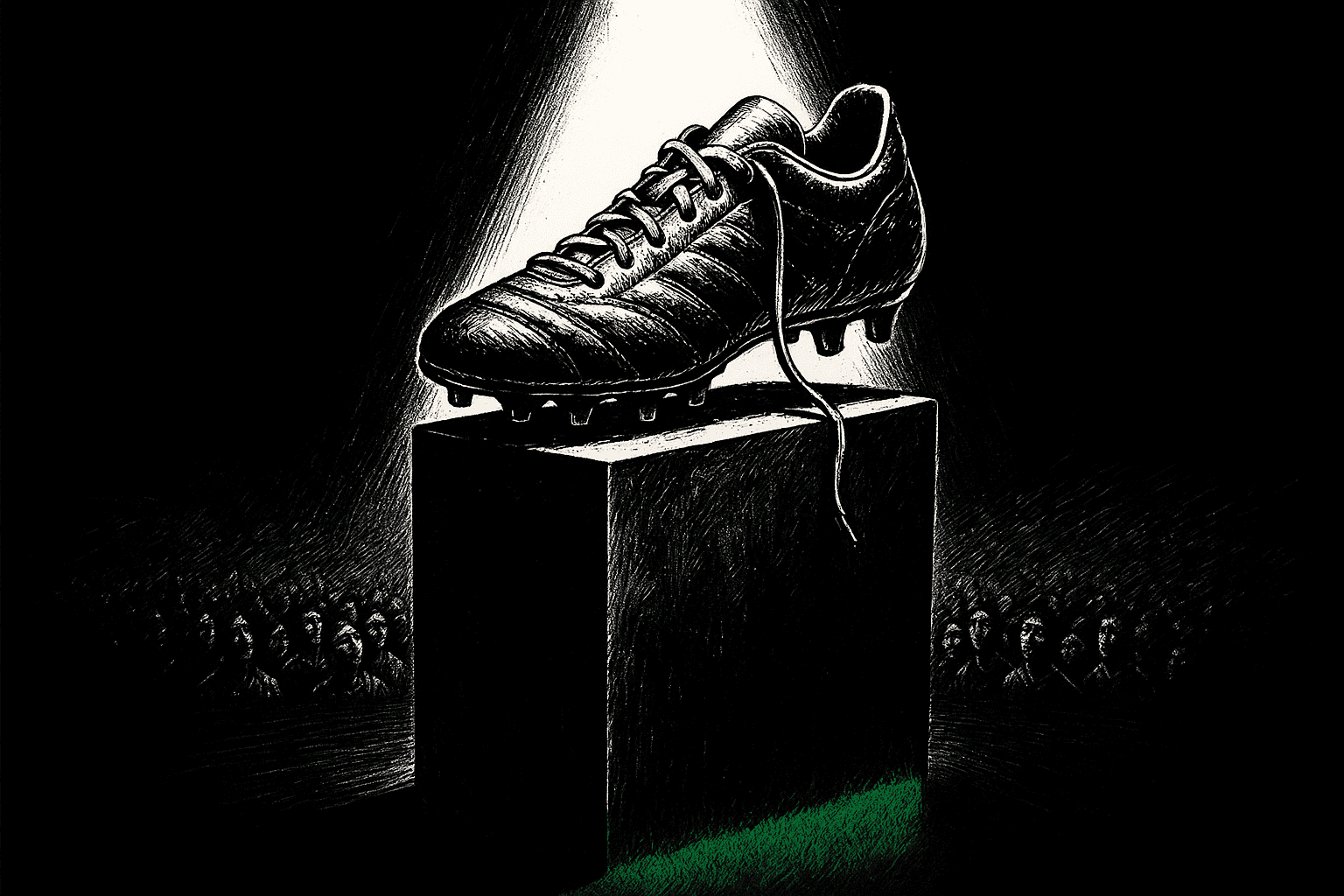
Nike beats Adidas not by making better boots but by turning inventory faster. Behind every pair lies a physics that tears ligaments, an ethics that killed kangaroo leather, and a women's market growing at twice the rate of the men's.

Borussia presented their kit inside a video game a week before any player wore it on a real pitch. It was not marketing: it was data mining.

Barcelona, Madrid and Tottenham have turned their stadiums into year-round revenue machines. Football is now the most celebrated and least profitable tenant in its own home.
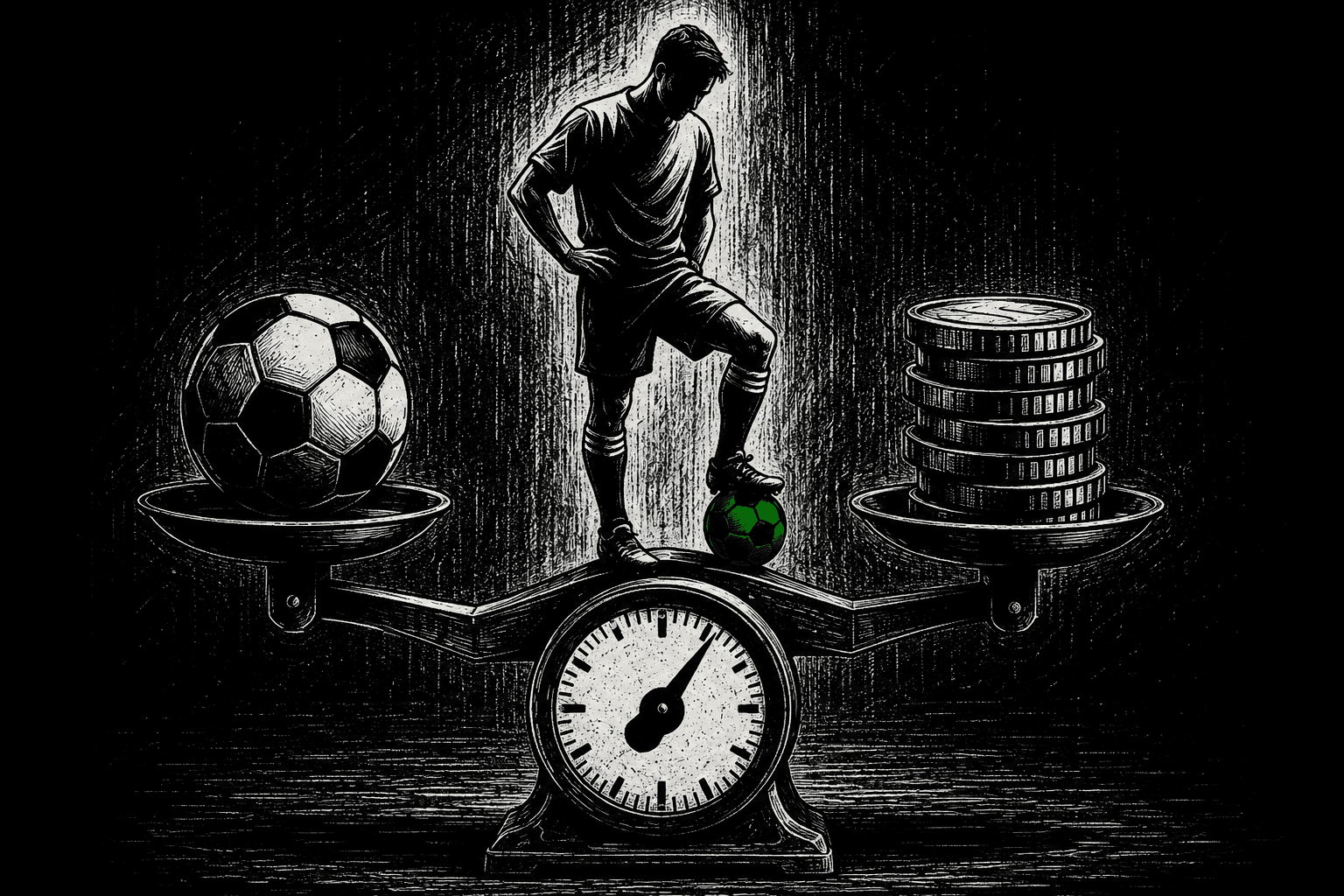
Atlético want 150, Barça are offering 130, and neither side is lying. The price of an elite footballer is not a number: it is a range that shifts depending on who is buying and when.
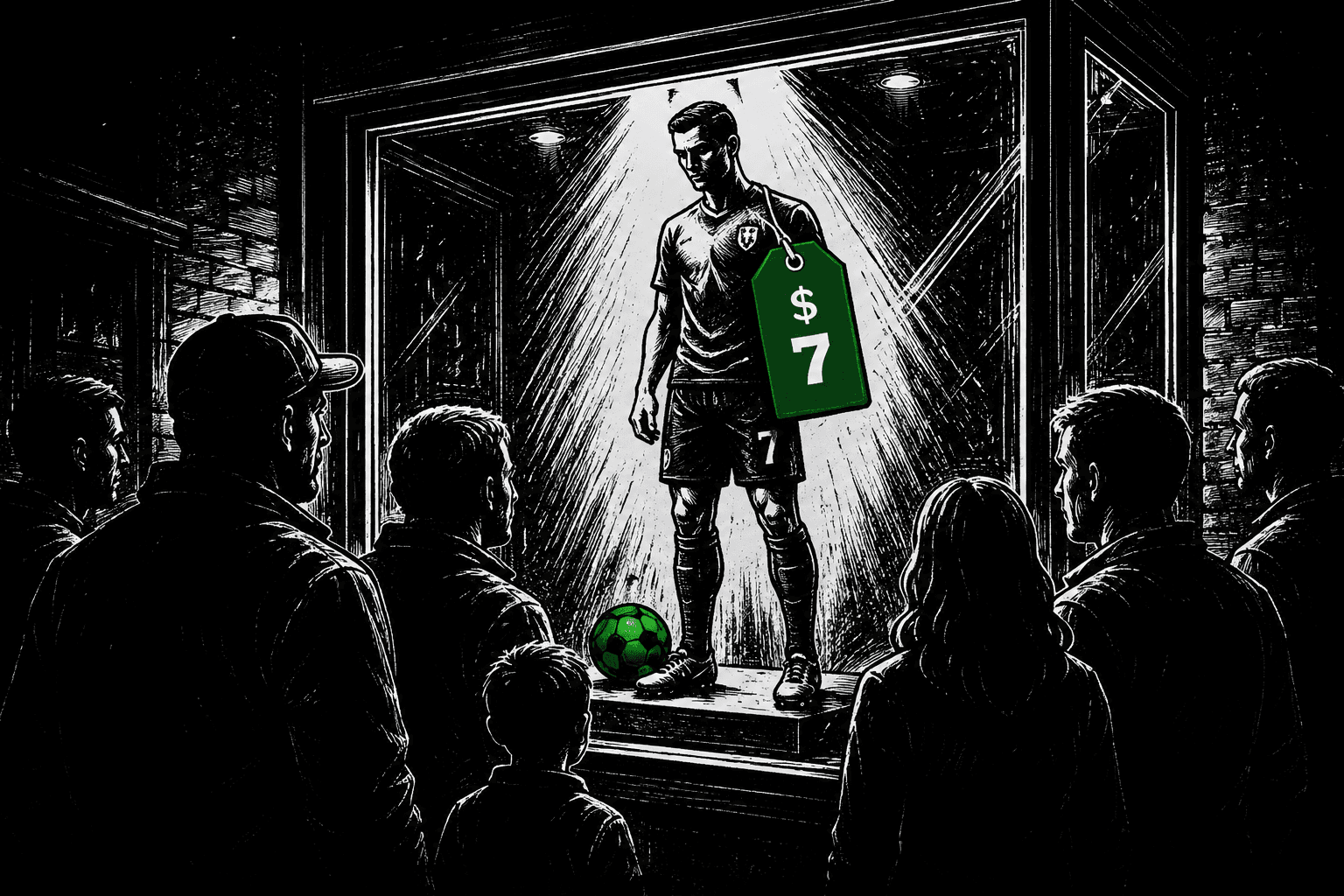
A World Cup does not manufacture quality, it manufactures price. The club that buys before the tournament keeps the appreciation; the one that waits pays a premium for six weeks of television.
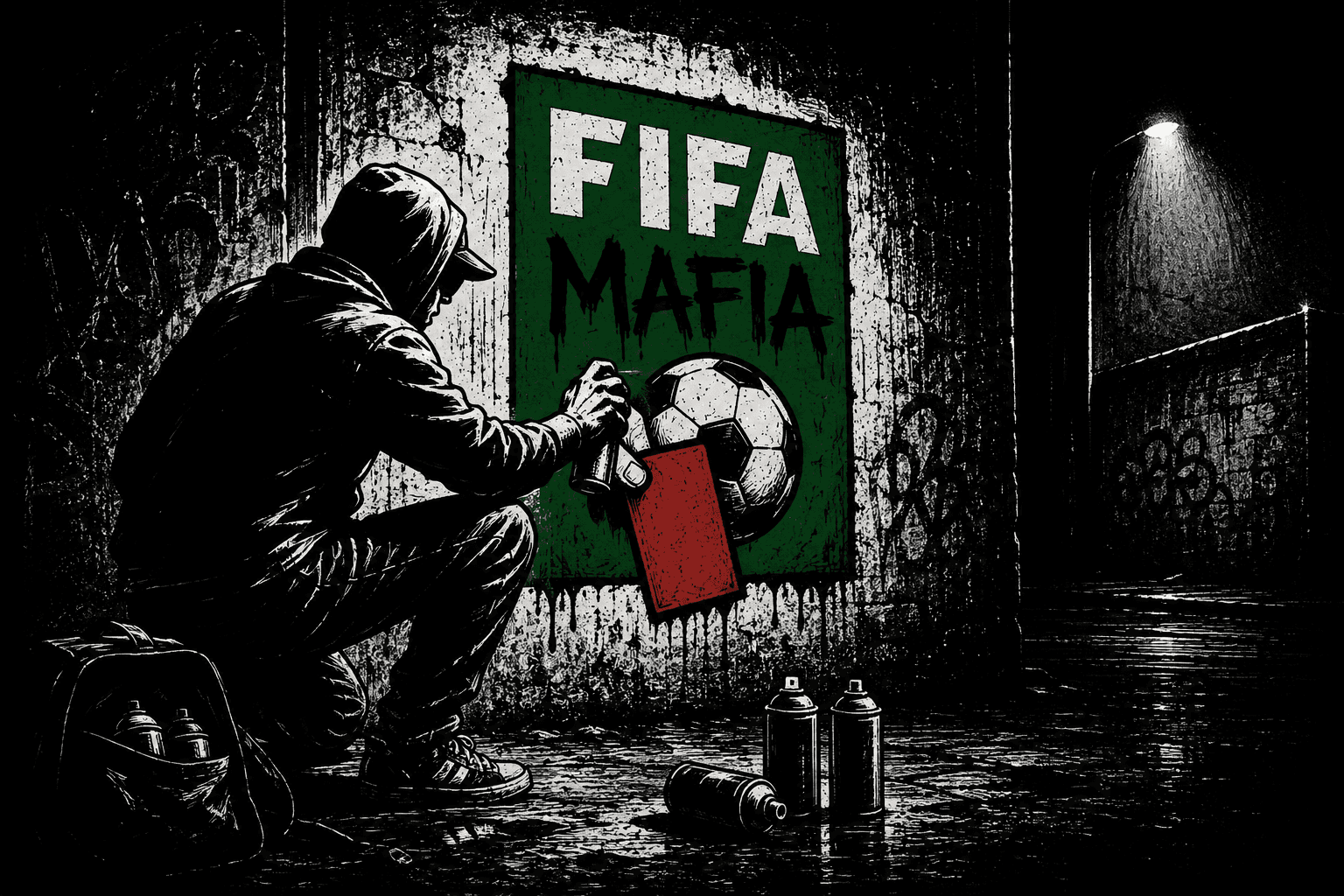
Corruption in football has not disappeared: it has changed shape. Once it was envelopes of cash in Caribbean hotels; now it is presidential phone calls that bend rulebooks in real time.