Kylian Mbappé said his favourite meme was one in which his face appears over the portrait of a Chinese dictator. He was referring to Mao Zedong, and the description is no eccentricity: it is the one shared by the vast majority of historians outside China. Beijing's response has been a lesson in how power works when combined with money. Three Chinese companies broke their contracts with the player, state television stopped broadcasting the entire LaLiga, Mbappé apologised, Javier Tebas apologised on behalf of all the clubs, and China has responded that it is not enough. Now it wants Real Madrid to apologise as well.
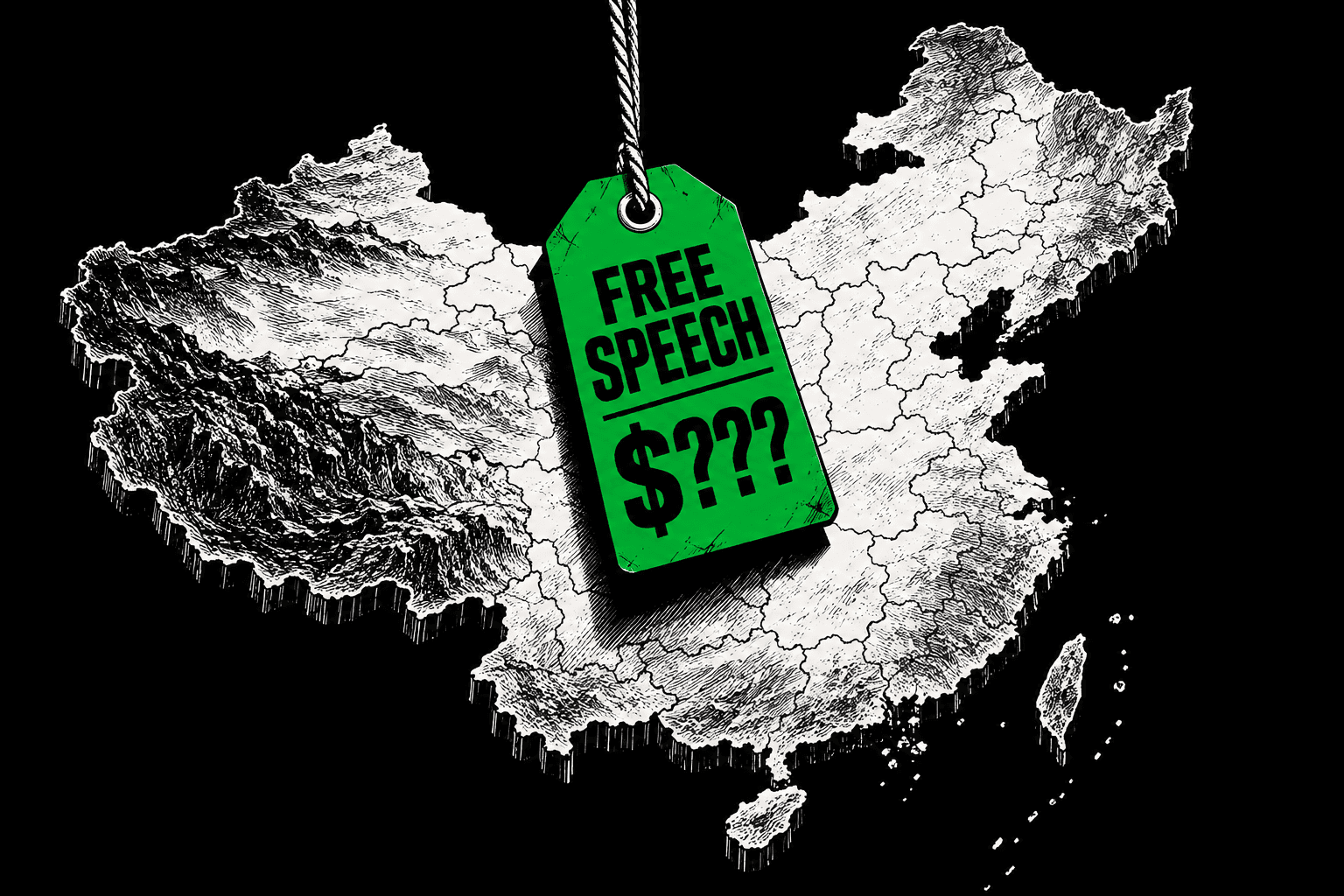
It is worth pausing to consider what is happening, because this is not just another controversy involving footballers and social media. A foreign government is punishing a European league for the opinion of one of its players, expressed in Europe, in a European outlet, about a historical fact. And it is demanding that European institutions apologise for it. If that is accepted, the West will have admitted that what can be said within its own borders is decided, in part, by whoever holds the key to a market.
The West cannot subordinate itself to that, either morally or legally. Our societies have their own rules about what can be said: laws against defamation, against incitement to hatred, against libel. They can be debated, but they are ours — they come from our parliaments and are applied by our judges. What cannot happen is that an invisible layer of prohibitions dictated from Beijing, enforced through cancelled contracts, is added on top. The fact that a Spanish football club has to weigh whether a player is allowed to have an opinion about Mao is precisely that.
Freedom of expression is not just one freedom among others. It is the one that makes all the rest possible. Without being able to say what one thinks, one cannot criticise power, denounce abuse, correct error, defend a minority or vote with information. A free press, science, justice and democracy itself all depend on someone being able to say out loud what others would prefer left unsaid. That is why I regard it as the spark of freedom: when it goes out, the others follow, because no one can claim them. And that is why it must be defended precisely when it is uncomfortable, because a freedom of expression that only protects opinions people like protects nothing at all.
The problem is that the West arrives at this clash weakened — and not only through China's doing. We have spent years trimming freedom of expression from within, in the name of an ever stricter morality about what can be said, how and by whom. I do not share that excess of zeal, which confuses offence with harm and has turned self-censorship into a habit. But at least it is our own debate, one we can have and can win or lose. What was missing was the added inability to express opinions about other countries because we are penalised economically for doing so.
Both paths lead to the same place. One form of censorship is born from an excess of local morality; the other, from the economic interest of not upsetting those who buy from us. One says something cannot be said because it causes offence; the other, because it costs money. The result in both cases is the same: a player, a journalist or a citizen who, before speaking, calculates whether it is worth it — and ends up saying nothing.
To be fair, a nuance deserves acknowledgement: a private Chinese company has the right to decide who it associates with, just as any Western brand that drops an athlete over his opinions does. That is not the problem. The problem is that behind this reaction stands a State that uses its public broadcaster, its spokespersons and its market as a weapon — one that is not content to punish the person who spoke but punishes everyone connected to him, and that refuses to accept apologies because what it is looking for is not an apology. It wants the rest to take note. It already did this with the NBA in 2019 over a message about Hong Kong, and with Mesut Özil for denouncing the persecution of the Uyghurs. Every time it works, the next person thinks twice before speaking.
That is why the response of Spanish football matters more than it seems. LaLiga has already apologised and it has got nowhere. If Real Madrid does the same, it will be established that a footballer's opinion about a dictator is something a European club must apologise for to a foreign government. And the question becomes unavoidable: what comes next. A comment about Taiwan, about Tibet, about human rights. A shirt, a flag, an armband. The list of what cannot be said grows every time someone accepts it.
Freedom has a price, and sometimes it is paid in television contracts. But the price of surrendering it is far greater, because it is not paid once — it is paid forever. The West can trade with China, compete with China and do business with China. What it cannot do is let China decide what can be said in the West.