
A few weeks before the tournament, the FIFA official ticketing system does something extraordinary: it sells tickets for zero dollars. A pricing error like so many others, the kind FIFA cancels within hours, leaving a handful of lucky holders with a ghost ticket and a crowd seething with the feeling that the machine is more in charge than they are. That small, ridiculous scene describes this World Cup better than any press release. The first World Cup where artificial intelligence is not a laboratory toy but the infrastructure holding the whole operation together.
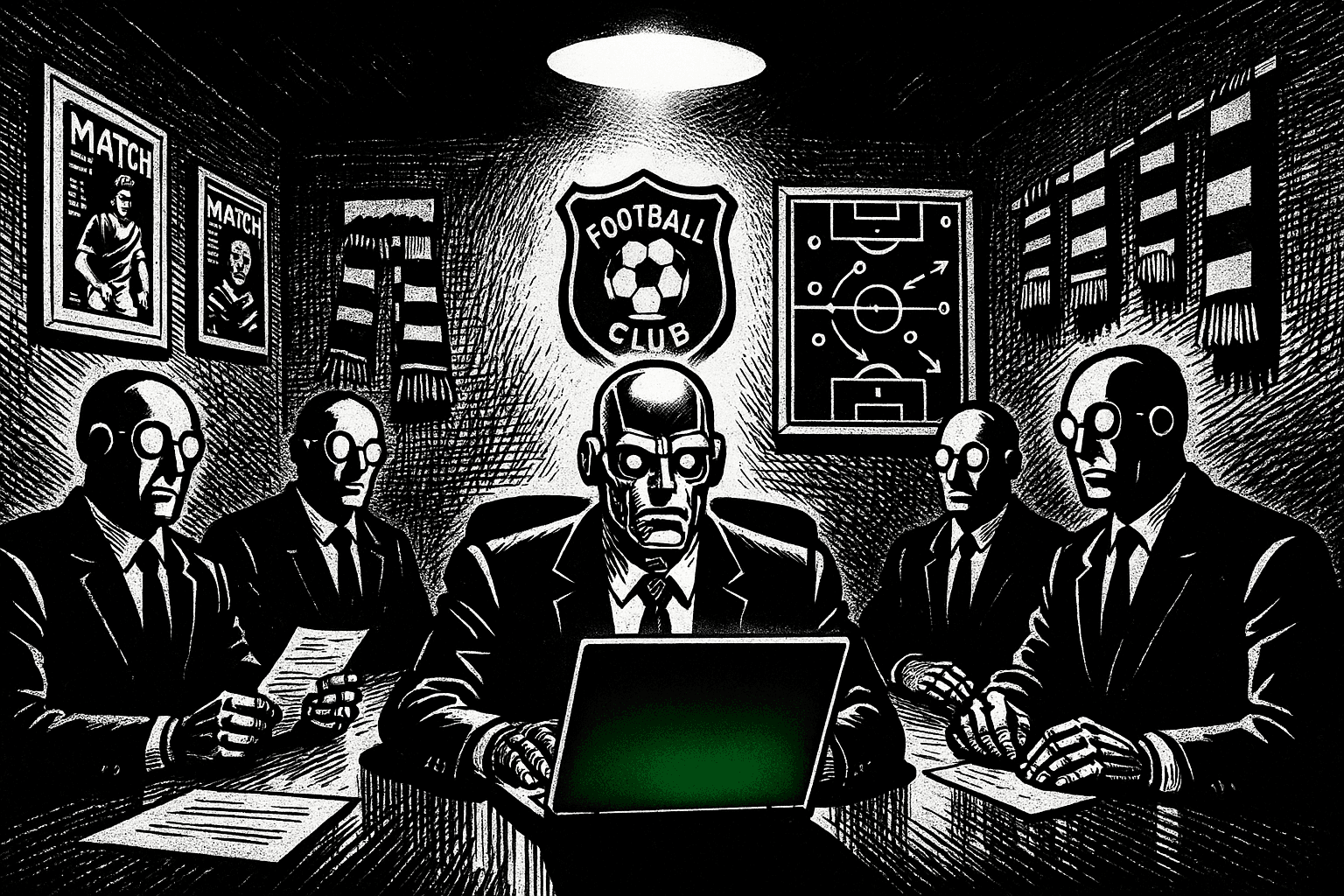
The AI of 2026 is being sold to us as refereeing precision and 3D avatars, and all of that exists, but what has really been built across Canada, Mexico and the United States is the largest surveillance and mass-control network ever deployed at a sporting event, with public money and no expiration date. Football is the excuse. The legacy is something else.
It is worth understanding why this is not Qatar 2022 with more cameras. In Qatar there were isolated algorithms for specific tasks, siloed systems that did not talk to each other. What 2026 represents is an ecosystem. Sixteen cities, three sovereign countries with three different privacy laws, time zones that do not align and transport networks that do not know each other, all stitched together by edge-computing servers and enterprise-grade AI models sharing data in real time. FIFA did not add technology to the World Cup. It rebuilt the World Cup around the technology.
At the stadium gate there is no longer a paper ticket or a mobile screen. At venues such as Gillette in Boston, Hard Rock in Miami or Mercedes-Benz in Atlanta, the Go-Ahead Entry system asks for a selfie in the official app, links your face to your entry code and your payment account, and when you approach the gate an optical reader generates a mathematical template of your face and lets you through in under a second. Mexico went further and digitised access one hundred percent with mandatory biometrics at the turnstiles, building on what it had already been testing in its domestic league. Comfortable, fast, frictionless. And with the small print unwritten, because there are no clear policies on what happens to that facial data when the tournament ends, according to criticism raised by the ACLU.
The track record of this technology invites both caution and irritation. At the 2019 Copa América in Brazil, biometric checks placed innocent citizens on restriction lists near the Maracanã. At the 2017 Champions League final in Cardiff, facial scanning wrongly flagged more than 2,000 people as potential offenders. More than two thousand false positives. Even so the trend expands without pause, with Chile joining mandatory facial registration from early 2026. The machinery fails, leaves administrative casualties along the way, and keeps growing. The Cardiff error stopped nothing. It normalised it.
On the stadium floor the ambition goes further still. The security operation for 2026 was assembled with a public fund of hundreds of millions of dollars channelled through US federal agencies, to sustain the largest AI-assisted civilian video surveillance deployment in the history of sport. Smart cameras that analyse the gait, posture and acceleration patterns of crowds to distinguish normal movement from agitation, and flag stampedes, fights or medical emergencies before they happen. And Boston Dynamics Spot robotic dogs patrolling perimeters and underground concourses at night, with thermal sensors and 360-degree cameras streaming live video to Lenovo's Intelligent Command Centre, the brain monitoring all sixteen venues at once. Fact-checking agencies took the trouble to clarify that those robots do not carry autonomous facial recognition while moving, they only scout. That a denial was necessary says a great deal about the ground we are playing on.
The logistics side is where AI becomes almost invisible and therefore most effective. Hotels stopped looking at seasonal records and instead began ingesting real-time data from ERP systems, point-of-sale terminals, e-commerce platforms and staff availability, adjusting rates in the middle of the night according to how the knockouts are going. If your team advances, your room gets more expensive on its own. Contact centres automatically audit one hundred percent of conversations to detect friction before the channel collapses. And the RapidSOS platform, in emergencies, transcribes and translates up to 50 languages in real time, trained on synthetic data to isolate the caller's voice from the stadium roar and send a summary to paramedics and firefighters. Here the technology genuinely saves lives, and it is worth acknowledging that without irony.
The pitch side is the most spectacular and the part that will generate the soft headlines. The official ball will carry an inertial sensor that delivers acceleration coordinates at a rate far exceeding traditional television cameras. That signal feeds into semi-automated offside, which tracks dozens of body points on each player from skeletal cameras high in the stadium, and the algorithm pins the exact moment of the pass within seconds, with 3D avatars generated from a one-second scan. And the tactical tools powered by FIFA's football language model promise to give all 48 national teams the same analysis, with the stated aim of closing the gap between wealthy and poorer federations. Fine on paper. We will see whether a modest federation gets as much out of the tool as one with a hundred analysts behind it.
The marketing finally gave away the spirit of the whole venture. The big technology companies have rushed to turn their search engines and chatbots into interactive supporters, capable of producing memes and anthems on demand and putting virtual stars in conversation with fans around the clock without the player existing in real time. And the cities deployed their bots: Xoli on WhatsApp managing more than 3,000 daily activities in Mexico City, Frankie in Frisco, Libby and Ellis in New York. The fan, surrounded.
And here is the honest counterpoint, because the fan did not stay still. The attack surface exploded to the point where the Canadian Centre for Cyber Security classified the event as extreme risk, and Arctic Wolf detected more than 10,000 fraudulent domains from the start of the year, growing at 2,000 per month, cloning FIFA's visual identity using generative AI. But people fought back with their own weapons. Fan forums filled with tens of thousands of members coordinating boycotts of abusive resale. They built tools to hunt for price drops and browser extensions to dodge FIFA's own bots. The same technology that surveils also decentralises and bites the hand. Not all the power stayed at the top.
When the last spotlight goes out after the final, the behavioural cameras, the facial readers and the Lenovo brain will not go home. We will have built three trilateral smart cities with a 104-match tournament as the alibi. The ball goes into a display case. The control infrastructure stays on.