
Every autumn world football stops for one night at the Théâtre du Châtelet in Paris to find out who is the best player of the year. What almost nobody asks is who pays for that night and, above all, who lives off it. The answer dismantles an idea that still circulates among fans and journalists alike: that France Football is an important magazine that also happens to organise an award. By 2026 the relationship has been completely reversed. France Football is a globally recognised award that also keeps a magazine in business.
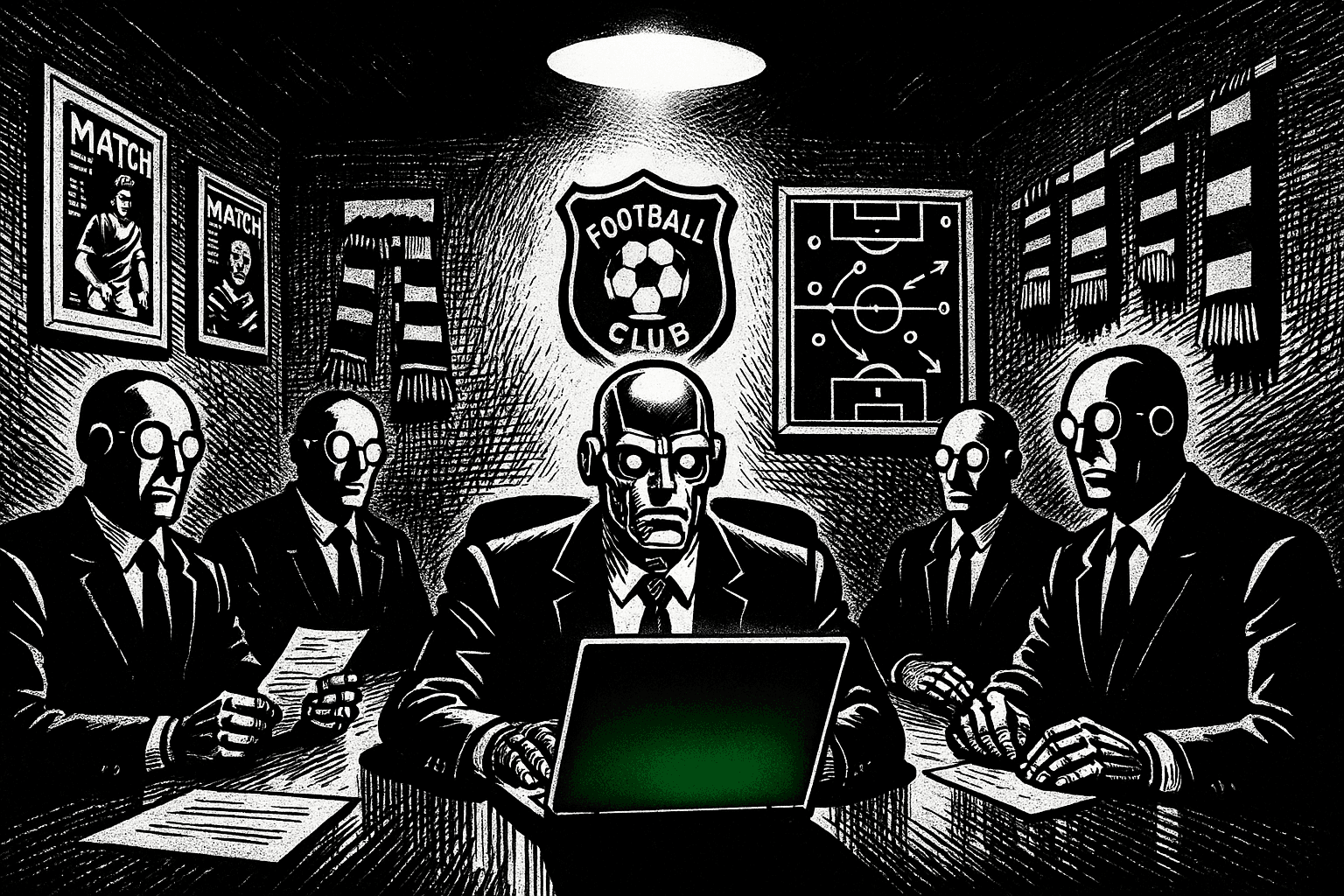
To understand this you have to start with a legal detail that usually goes unnoticed. France Football does not exist as a company. There is no société by that name filing its own accounts in France. It is a brand, a publishing masthead, integrated within L'Équipe SAS, the press subsidiary of Groupe Amaury, the family holding that also controls the Tour de France and the Dakar Rally through its events division. That structure has a practical consequence: we will never know exactly how much France Football earns or loses, because its numbers dissolve into those of the daily L'Équipe and the rest of the group's publications. The opacity is not an accident; it is a feature of the model.
What is known is the context in which that brand survives. The group's press subsidiary turns over around 124 million euros and makes money, but not much, with margins that have narrowed in the latest financial year. Meanwhile, the sports events subsidiary earns three times as much and generates profits of a completely different order, to the point where the owning family was able to pay itself more than one hundred million euros in dividends in a single year. Within that house, print is the small and fragile business; events are the large and profitable one. And the Ballon d'Or, although it was born in a newsroom, behaves increasingly like an event.
That drift accelerated in 2021, when the group made two decisions that redefined what France Football is as a media outlet. The first was converting a weekly magazine into a monthly publication sold just one Saturday per month, bundled with the daily L'Équipe. The second was a redundancy plan that eliminated dozens of posts and dissolved France Football's own editorial team, integrating its journalists into the unified L'Équipe staff. In other words, the magazine that chooses the best footballer in the world no longer has a team dedicated exclusively to making the magazine. The print run, which hovered around 87,000 copies before the change, fell sharply and has stabilised below 70,000 — a figure that is itself largely explained by the joint sale with the daily, not by the standalone appeal of the masthead.
In the digital world the situation is even more telling. France Football has no subscription platform of its own and no independent advertising ecosystem. Its online presence is a section within the L'Équipe portal and a microsite dedicated to the Ballon d'Or. All of the group's digital monetisation effort is concentrated in L'Équipe's premium subscription, which is growing solidly but which carries the France Football name nowhere. If you add up what the magazine generates on its own — newsstand sales after distribution costs plus some print advertising — the result is an activity worth barely two or three million euros a year. It is not a business; it is a presence.
And this is where the other side of the equation appears. Because while the print product shrank, the ceremony expanded. The Ballon d'Or stopped being a journalistic awards ceremony and became a television spectacle lasting more than four hours, with a red carpet, post-show debates and a free-to-air audience in France that comfortably exceeds the readership that buys the magazine. Around the event a sponsor structure has been built that includes luxury watches, sports betting, video games and, since 2025, a Gulf airline as the title sponsor. The approximate value of the event business — adding sponsorships, international rights, hospitality and brand licences — moves in a range of between ten and sixteen million euros per edition. Set against the two or three million from the magazine, the conclusion is hard to argue with: between three-quarters and eighty-five per cent of everything the France Football brand earns comes from a single night each year.
The step that consolidated this transformation was the agreement with UEFA signed at the end of 2023 and in force from the 2024 edition. It is worth reading carefully, because the division of roles is revealing. Groupe Amaury retains ownership of the Ballon d'Or brand, control of the voting system, the selection of the international jury of journalists and custody of the ballots. UEFA, in exchange for giving up its own annual awards, takes on logistical co-organisation, television production, the sale of international rights through its global network and the commercialisation of sponsorships and hospitality, sharing the net profits. In other words, the media outlet kept the legitimacy and the federation kept the commercial machinery. Each party contributed what the other lacked, and both knew perfectly well which side was the valuable one.
That exchange is not unique in European sports journalism, and the comparison helps to understand what is at stake. Tuttosport's Golden Boy, which rewards the best player under 21, followed a similar logic: faced with the decline of the printed newspaper, the Italian group partnered with commercial agencies and ended up selling the title sponsorship to Transfermarkt, going so far as to rename its ranking after the brand. The Guerin d'Oro, on the other hand, shows the opposite path. It was born in 1976 in the magazine Guerin Sportivo to recognise the best player in Serie A, but when the publication's sales and frequency fell, nobody turned the award into a televised event with sponsors, and the prize faded at the same pace as the magazine. FIFA, for its part, after breaking its alliance with Amaury in 2015, created The Best as an institutional marketing tool integrated into its global commercial cycle. It does not aim to finance any masthead; it aims to feed a federation. Three different models for the same intangible asset: an award with a recognisable name.
This shift towards the event has a cost that has already become visible. When Real Madrid decided in October 2024 not to travel to Paris upon learning that Vinícius would not win, and when the club's entourage linked that decision to UEFA's arrival as co-organiser in the middle of the Super League standoff, the Ballon d'Or paid the price for having become something more than a journalists' ranking. An award that generates revenue through global sponsors and broadcasting rights sold by a federation ceases to be perceived as neutral, even if the vote still rests with the press. What is striking is that, in economic terms, the snub did not move a single relevant figure: the audience held steady, sponsors honoured their contracts and, two editions later, the club itself was celebrating its players' nominations on its own platforms. The damage was reputational and temporary; the business, untouched.
All of this leads to an uncomfortable question for sports journalism: if the magazine is residual and the event is the business, why does Groupe Amaury not simply close France Football and keep only the Ballon d'Or? The answer is the key to the entire model. Because the award is worth what it is worth precisely because it is presented by a magazine with seventy years of history and a jury of journalists — not a federation, a sponsor or a data platform. UEFA agreed to give up its own trophies in order to associate itself with that legitimacy, and no commercial contract can manufacture it from scratch. The monthly masthead, with no dedicated editorial team and a modest print run, is not kept alive because it is profitable, but because it is the certificate of authenticity that allows the profitable part to be sold.
The Ballon d'Or is, at its core, an extreme case of something that runs through all sports media: content has ceased to be the product and has become the guarantee. France Football no longer sells information about football; it sells the credibility accumulated from having sold it for decades. That is an asset that can be monetised for a long time, but one that cannot be produced again once it has been spent. The real tension in the model is not how much the ceremony earns compared with the magazine, but how close the award can get to the logic of spectacle and sponsorship before it stops looking like a journalistic verdict and starts looking like just another event. The day that happens, the group will discover that the magazine it had been keeping alive for years out of sheer convenience was, in reality, the only thing it had.